Hello
readers, writers and everyone else who has stumbled upon us today. It’s a
special day here at Romance Books 4 Us because we have New York Times best-selling
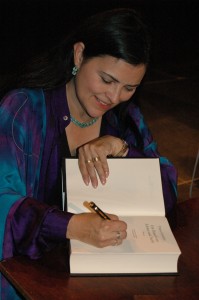
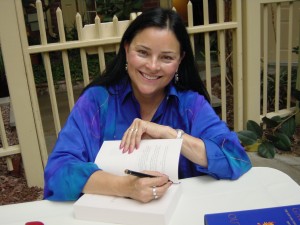
author, Diana Gabaldon visiting us. Get comfy, because Diana is about to share with us a little bit about her work, herself and some exciting things she has happening in her world.
***For more information about Diana Gabaldon, visit her author page at http://www.romancebooks4us.com.
~~~~~~
Thanks
for stopping by today, Diana. I know the readers are Romance Books 4 Us have
been eagerly awaiting this interview to learn more about you!
Q:
I read that in addition to your extensive degrees that you actually served as a
university professor for over ten years. Did teaching young minds help mold you
as a writer?
Well,
no. I was a scientist. My degrees are all in the biological sciences
(I have a Ph.D. in Quantitative Behavioral Ecology) and I was primarily a
research professor. I did teach classes
fairly often, substituting for professors on sabbatical, or teaching hugely
popular classes that needed more than one professor to accommodate the number
of students—and I like teaching very
much, but my being a university professor had nothing to do with my writing.
(I
should modify that, maybe, by noting that any
form of writing is good, in that it gives one confidence and skill, but beyond
the basic nuts and bolts of sentence construction, grammar and
punctuation—which I had by the fifth grade (I went to a Catholic parochial
school)—the skills required to write fiction aren’t quite the same as
the ones needed to write an elegantly coherent scientific paper.)
Q:
Was it difficult to make the transition from educator to best-selling
author? Or was it a smooth transfer of
roles?
Well,
I’d been writing a novel while
working at the university, so really, all I did was resign when my university
contract came up for renewal, soon after I’d sold my first book and got a
three-book contract with it.
As
for the “best-selling” part, though…in all the recent kerfuffle about the new
Starz tv series based on the books, that’s kind of come into stark
perspective. As I told the lovely young
Scottish actor who’ll be playing Jamie (Sam Heughan is his name), “for me, it
was like boiling a frog—I started as a complete nobody and got semi-famous very
slowly over the course of years. They’re
gonna throw you in at the hot end.”
Q: Is there anything you took from that
experience to be help you to become the writer you are today?
Everything writers see, think, and
experience influences their work. How
could it not? Now, it's true that
people do ask writers, "Where do you get your ideas?" and that
writers--out of facetiousness or desperation--give answers like, "From the
Sears catalog" (or "From Ideas.com," depending on the writer's
vintage). But the truth is that writers
get ideas from everything they see, hear, smell, touch, taste, think, feel, or
do—including the books they read.
Naturally, one wants to develop a
unique voice, but do kids learn to talk without ever being talked to? You have an individual voice,
by virtue of being an individual. And
your individuality is composed of your essential God-given spark of personality
and of the sum total of the things you encounter in life. Now, whether each encounter is a bruising
collision or a fruitful act of love…who knows? But all of it is grist to a writer's mill; so much should be obvious, if
one reads at all widely.
Q:
You’ve had dozens of releases throughout
the years, but one series has truly taken on a life of its own. Your Outlander
Series of books has delighted readers for years. With the first book in this
series, aptly named Outlander as well, did you know then
that it would become all that it has? Or did this take you by complete
surprise?
Err…possibly
you’ve mistaken me for someone much more prolific. I haven’t had “dozens of releases” and in
fact, I’ve only written the OUTLANDER
series. Granted, I’m working on my 14th
book, but I’ve been a novelist for 23 years; not really blinding speed, I mean.
But
to answer your essential question, no, I
didn’t. I wrote OUTLANDER for practice,
in order to learn how to write a novel.
I didn’t intend to show it to
anyone, let alone try to publish it. But
Things Happened, and…here we all are, much to my amazement, with (my agent
tells me) 25 million books in print in 38 countries, and a cable-TV show (to be
aired on the Starz channel and its licensees in various countries) about to
begin filming in Scotland this September. Who expects that sort of stuff?!?
Just
goes to show that if you keep working, eventually you get somewhere, I suppose.
Q:
With the Outlander series, or any of your books, do you ever find it difficult
to come up with new and exciting characters to draw us in? Or have you found a
trick to keep things fresh and exciting?
Heck,
no. To both questions. I seldom (if ever) “come up” with characters,
in the sense of deliberately constructing one. People just come along and talk to me…and I listen. I show up for work, and so do they.
As
to tricks, really no. It’s just a
combination of imagination and research. I’m not writing novels in any particular genre, so am not bound by the
standard genre forms and expectations; I’m free to explore the lives and times
of the characters, and follow the evolving shape of each story. As it is, while the series does deal with an
ensemble of continuing characters, these people change with life and circumstance, and each book is unique in
structure, tone, approach, and theme.
I
don’t like to do things I’ve done before.
Q:
Have you ever considered trying a new sub-genre? Are there any that interest
you which you haven’t tried yet?
What
is this word, sub-genre…? Given the name and focus of your blog, I, um, kind of assume that you’re assuming that I write romance
novels. I don’t—as anyone who does would
gladly tell you. (I like romance novels, and I certainly read enough of them to know that’s
not what I write.)
As
I said above, I wrote OUTLANDER for practice. That being so, I wondered what might be the easiest sort of book to
write—no point in making things hard. After a bit of thought, I decided that a historical novel might be the
easiest thing to write for practice; I was
a research professor; I knew my way around a library. It seemed (I thought) easier to look things
up than to make them up…and if I turned out to have no imagination, I could
steal things from the historical record. (This works really well, btw…)
But
since it was for practice, when
Claire Beauchamp Randall showed up on the third day (up ‘til then, all I had
was a man in a kilt) and started making smart-ass modern remarks (and also took
over and started telling the story herself), I said, “Hey, I’m not going to
fight with you all the way through
this book. No one’s ever going to see
this; it doesn’t matter what bizarre thing I do—go ahead and be modern, I’ll
figure out where you came from later.” So it’s all her fault that there’s time-travel in these books.
All
that being so…I made no attempt whatever to make the book conform to any kind
of genre; I used elements and literary devices from all the sorts of books I
liked—and I like a lot of different
kinds of books.
Consequently…the
marketing people had a hell of a time trying to sell the book, twenty years
ago, long before electronic book-selling loosened the descriptive requirements.
And
in further consequence…the books have been nominated for several Rita Awards,*
as well as the SFWA’s Nebula Awards, a
Quill Award for “science-fiction/fantasy/horror” (I actually won that one, beating out both George
R.R. Martin and Stephen King), an
Edgar Award from the Mystery Writers of America, and the Corine International
Prize for Fiction. I won that one, too,
which was Very Cool, and got to go to Germany to accept it on Bavarian
television, which was also very cool, though Somewhat Fraught…
The theater where they held the award ceremony was a
recently restored historic opera house, with the original wooden folding seats. I was elegantly attired in chiffon evening trousers
and beaded tank, with a long silk coat with Oriental poppies on it over all—and
two small electronic boxes clipped to my pants in back: one was a transmitter for the translation (as
the proceedings were in German) and the other was the transmitter for my
lavaliere mike. I was last on the
program, and after squirming around on my seat for an hour, one of the boxes
had worked loose and fallen down between the seat and its back--a fact I
discovered when they called my name and I leapt up, only to discover that I was
tethered to my seat by the box's wire. I succeeded--with frantic
yanking--in getting the damn thing out
of the seat (as the camera dollied in on me), but there was no way I was going
to stand there in full view of Bavaria, stuffing it back into my pants. So I raced up onstage with it in my hand, hoping people would think it a small,
chic evening bag of some kind.
Nobody seemed to
notice (or were too polite to ask me what the heck?), and aside from the
difficulty of juggling the box, a gigantic bouquet of Russian sunflowers (any
one of which was the size of my head),
and the prize--a limited edition porcelain figurine made by the Nymphenburg
pottery and designed by Miuccia Prada--while facing an honest-to-goodness
phalanx of flashbulbs, the evening worked out well.
*In
re the Rita Awards…as I said, various of the books have been nominated several
times, in various categories. In almost
all cases, scores came back as either a 6 (“I wish I’d written this book
myself”) or a 0 (“It doesn’t matter how good it is, it isn’t a romance”). The only time I did win a Rita, it was for a
category called “Best Book of the Year,” which—at that time—was not limited to
the romance genre, and which was voted on by the membership, rather than by a
panel of judges.
Q:
Out of all your books, is there one that still calls to you? Maybe one book that
you wouldn’t mind picking up again, and maybe telling a new chapter to their
already told tale?
Ahh…you
haven’t actually read my books, have
you? That’s perfectly fine, no requirement….
The
OUTLANDER series (and the Lord John novels, which are not a separate series,
but an integral part of the larger OUTLANDER series; also a number of novellas
dealing with backstory, subsidiary characters and lacunae in the larger books)
deals with the ongoing lives and times of a number of people; each book or
novella contains new chapters to the existing tale—but it is essentially all one big story.
If
there’s something I want to write, I write it; that’s about the size of it.
Q:
Your characters all seem to have one thing in common. They have incredible
charisma. How do you keep your mind constantly flowing to come out with these
characters which make us laugh and smile?
It’s
called “work.”
Really. Some days, it “flows”—and some days, writing
is like pushing rocks uphill…with your nose. You just show up, though, and do your best, and eventually, the
characters start showing up, too.
Q:
The word out on the cyber street is that Written In My Own Heart’s Blood is
being released in March 2014. This will be the eighth book in the Outlander
series. Can you share a small excerpt or teaser with us on this one?
Sure.
WRITTEN
IN MY OWN HEART’S BLOOD
Copyright
2013 Diana Gabaldon
William had
left the house like a thunderclap, and the place looked as though it had been
struck by lightning. I certainly felt
like the survivor of a massive electrical storm; hairs and nerve endings all
standing up straight on end, waving in agitation.
Jenny Murray
had entered the house on the heels of William’s departure, and while the sight
of her was a lesser shock than any of the others so far, it still left me
speechless. I goggled at my erstwhile
sister-in-law—though come to think, she still was my sister-in-law…because Jamie was alive. Alive.
He’d been in my arms not ten minutes before, and the memory
of his touch flickered through me like lightning in a bottle. I was dimly aware that I was smiling like a
loon, despite massive destruction, horrific scenes, William’s distress—if you
could call an explosion like that “distress”—Jamie’s danger, and a faint wonder
as to what either Jenny or Mrs. Figg, Lord John’s cook and housekeeper, might
be about to say.
Mrs. Figg was
smoothly spherical, gleamingly black, and inclined to glide silently up behind
one like a menacing ball-bearing.
"What's
this?" she barked, manifesting herself suddenly behind Jenny.
"Holy
Mother of God!" Jenny whirled, eyes
round and hand pressed to her chest.
"Who in God's name are you?"
"This
is Mrs. Figg," I said, feeling a surreal urge to laugh, despite--or maybe
because of--recent events. "Lord
John Grey's cook. And Mrs. Figg, this is
Mrs. Murray. My, um...my..."
"Your
good-sister," Jenny said firmly.
She raised one black eyebrow.
"If ye'll have me, still?"
Her look was straight and open, and the urge to laugh changed abruptly
into an equally strong urge to burst into tears. Of all the unlikely sources of succor I could
have imagined... I took a deep breath
and put out my hand.
"I'll
have you." We hadn’t parted on good
terms in Scotland, but I had loved her very much, once, and wasn’t about to
pass up any opportunity to mend things.
Her
small firm fingers wove through mine, squeezed hard, and as simply as that, it
was done. No need for apologies or
spoken forgiveness. She'd never had to wear the mask that Jamie did. What she thought and felt was there in her
eyes, those slanted blue cat-eyes she shared with her brother. She knew the truth now, of what I was—and
knew I loved—had always loved--her brother with all my heart and soul--despite
the minor complications of my being presently married to someone else.
She
heaved a sigh, eyes closing for an instant, then opened them and smiled at me,
mouth trembling only a little.
"Well,
fine and dandy," said Mrs. Figg, shortly.
She narrowed her eyes and rotated smoothly on her axis, taking in the
panorama of destruction. The railing at
the top of the stair had been ripped off, and cracked banisters, dented walls,
and bloody smudges marked the path of William's descent. Shattered crystals from the chandelier
littered the floor, glinting festively in the light that poured through the
open front door, the door itself cracked through and hanging drunkenly from one
hinge.
"Merde on toast," Mrs. Figg
murmured. She turned abruptly to me, her
small black-currant eyes still narrowed.
"Where's his lordship?"
"Ah,"
I said. This was going to be rather
sticky, I saw. While deeply disapproving
of most people, Mrs. Figg was devoted to John.
She wasn't going to be at all pleased to hear that he'd been abducted
by--
"For
that matter, where's my brother?" Jenny inquired, glancing round as though
expecting Jamie to appear suddenly out from under the settee.
"Oh,"
I said. "Hm. Well..."
Possibly worse than sticky.
Because...
"And
where's my Sweet William?" Mrs. Figg demanded, sniffing the air. "He's been here; I smell that stinky
cologne he puts on his linen." She
nudged a dislodged chunk of plaster disapprovingly with the toe of her shoe.
I
took another long, deep breath, and a tight grip on what remained of my sanity.
Mrs.
Figg," I said, "perhaps you would be so kind as to make us all a cup
of tea?"
~~~~~~~
Q: In June of this year your readers were
treated with the fantastic news that Starz gave a green light for the
Outlander series to hit the screen. As a reader and fan I know I am very
excited to see it once it hits Starz network. With shooting just getting
underway this month we can only imagine how exciting this may be for you. Can
you tell us how you’re dealing with all of the excitement? Have you caught
yourself jumping up and down on the bed? Or maybe occasionally giving yourself
a pinch?
Well,
my first reaction was extreme wariness. I’ve been through a number of
option deals before. Now, an option
essentially means that a production company offers you a modest amount of money
for a period of time, during which they have the exclusive right to try to
assemble the necessary (financing, a script, a director, etc.) to actually make a movie or television show.
If
the option expires without that happening…you get it back. You can then extend the option period to the
original production company (if you want to), sell it to someone else, or just
decide you don’t want to do that right now.
If
the production company does succeed
in putting together a deal (Very Long Odds, believe me)…the option contract
provides for a set purchase price for the actual film rights. Once they’ve paid
that, they’ve bought the film rights—and they own them forever. And can, basically,
do any damn thing they want to with them. Which means you want to be pretty dang careful who you deal with.
I
must say, though, that I’ve been Amazed at our good luck in falling into the
hands of Jim Kohlberg (the executive producer, who persevered for nearly four
years, through several execrable movie scripts, before finally putting together
the deal with Starz) and Ron D. Moore, the other executive producer and
show-runner. Ron and his associate,
Maril Davis, came out to my house in Scottsdale and spent two days with me,
talking over the books, the characters, the storylines, their ideas regarding
adaptation, etc. I was more than impressed, and very heartened at their willingness to include me in the
process.
That
inclusion has continued; they’re remarkably kind about showing me things and
asking my opinion (though they aren’t legally compelled to take my advice
<g>). I’ve seen the pilot
script—which, as I told them, was the only
script I’ve seen based on my work that didn’t make me either turn white or
burst into flames—and am thrilled with their casting choices (I’ve seen the audition
tapes for the main characters, Jamie Fraser, Claire Randall, and Frank/Black
Jack Randall, and they were Just Phenomenal).
The
show begins filming in Scotland pretty soon, and with luck, will likely air
sometime around next April. Can’t wait!
Thank
you so much for joining us today, Diana. I’m sure all the readers here will
agree with me that we will be anxiously awaiting the Outlander series as it
hits our television screens. While he might have to wait a year until it all
comes together, we’ll have the March 2014 release of Written In My Own Heart’s Blood to tide us over until then.
BLURB for Written In My Own Heart’s Blood
The wait is nearly
over—Claire and Jamie’s story continues in the next thrilling book in Diana
Gabaldon’s multimillion bestselling Outlander series. Written in My Own
Heart’s Blood follows Gabaldon’s characters through revolutionary
Philadelphia and onto the battlefields, as Jamie makes a dramatic return to
Claire’s side, a new army sweeps the city, and romance
and violence brew. This enthralling adventure carries us
through betrayal and redemption, death and danger, and through the perilous
waves of a family’s loves and loyalties.
Readers,
don’t forget to check out all Diana’s work by visiting her website. You can also find her on Twitter and Facebook.
DIANA’S BIO:
Diana
Gabaldon is the author of the award-winning, #1 NYT-bestselling OUTLANDER
novels, described by Salon magazine as "the smartest historical sci-fi
adventure-romance story ever written by a science Ph.D. with a background in
scripting "Scrooge McDuck" comics."
The
adventure began in 1991 with the best-selling classic, OUTLANDER, and has
continued through seven more New York Times-bestselling novels--DRAGONFLY
IN AMBER, VOYAGER, DRUMS OF AUTUMN, THE FIERY CROSS, A BREATH OF SNOW AND
ASHES, and AN ECHO IN THE BONE (plus THE EXILE, an OUTLANDER graphic novel),
with twenty-five million copies in print worldwide. She is presently working on the eighth novel
in the series, WRITTEN IN MY OWN HEART’S BLOOD.
The
series is published in 38 countries and 34 languages, and includes a nonfiction
(well, relatively) companion volume, THE OUTLANDISH COMPANION, which provides
details on the settings, background, characters, research, and writing of the
novels. (A second volume of the
COMPANION is in progress, which will cover Books 5-8 of the main series, plus
the Lord John Grey novels and other novellas and short pieces.)